

Rick Rubin produced Johnny Cash, the Beastie Boys, Slayer, Adele. When Anderson Cooper asked him on 60 Minutes whether he plays instruments, he said: “Barely.” Whether he can work a soundboard: “No. I have no technical ability. And I know nothing about music.”
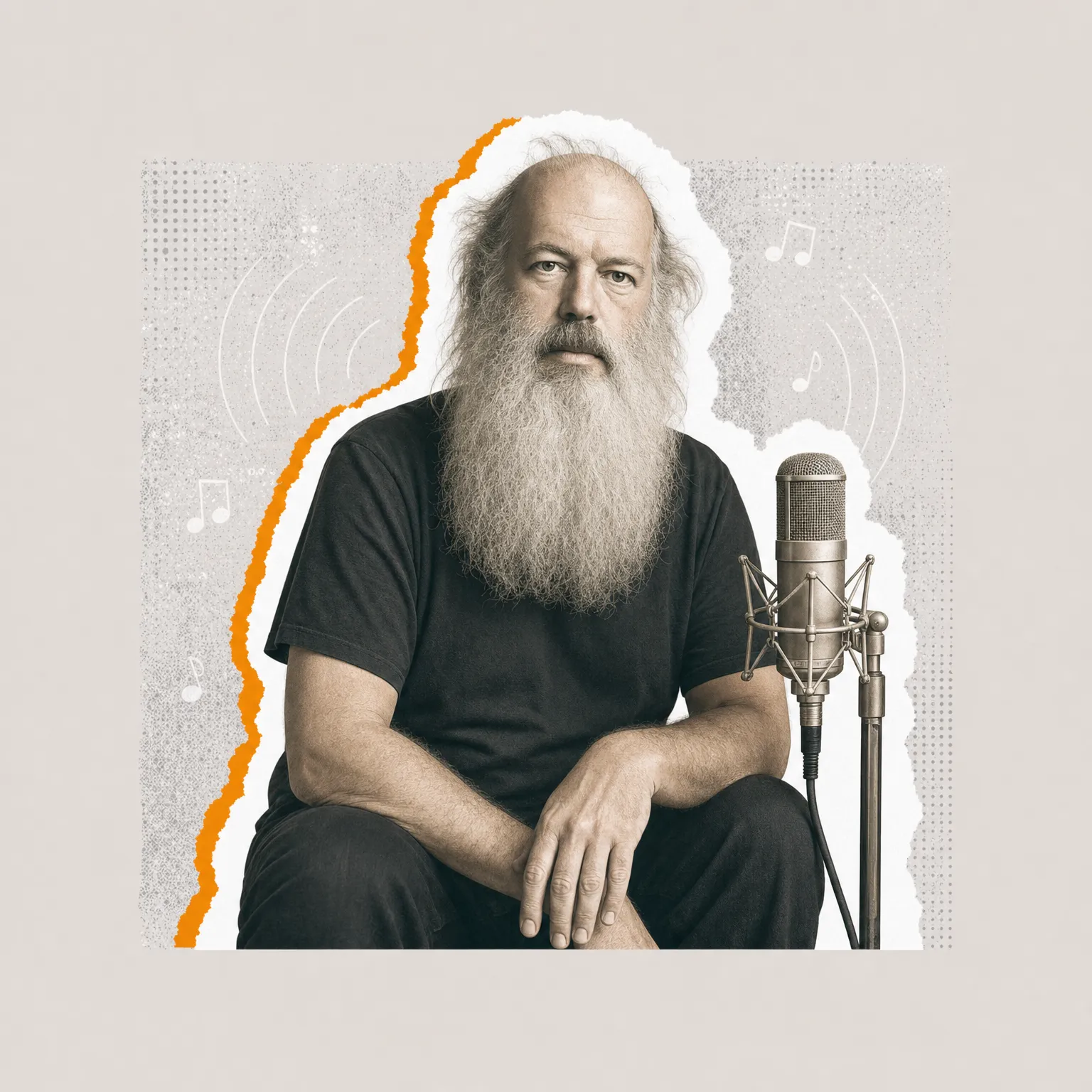
Then the line I keep coming back to: “Well, I know what I like and what I don’t like. And I’m decisive about what I like and what I don’t like.”
To be clear about the comparison: Rubin is a hero of mine, and our work is far from his status and achievements. But the shape of the job? That I recognize.
What people think we gave away
When we built BBN AI Studio, we wrote down almost everything an agency usually holds back. Twenty years of workflows, briefing structures, judgement calls, quality checklists, best practices. We turned them into signed skill sets and put them inside our clients’ AI tools. More than one person told me we were giving away the secret sauce.
I understand the reaction. I felt a version of it myself. But watching someone trigger a workflow that used to live only in my head is a good reward for that openness.
The longer we do this work, the clearer it becomes what clients actually pay for: the taste, and the ability to express it in a language that a machine can hold and an IT department can approve.
The translation is the work, twice
Last December I sat with a CMO at a global engineering company when a pretty mediocre proposal for a product name landed in his inbox, one day before the company shut down for Christmas. I spent 40 minutes pulling his naming logic out of his head and into a prompt. By late afternoon, the CEO had picked one of the new names. I told the full story in Expert judgement only counts once you hand it over.
His judgement and our skills did the heavy lifting. But above all his judgement. Fifteen years of it. My part was ‘just’ a translation: getting expertise out of heads, the CMO’s and ours from 20 years of B2B marketing, and into a form an AI model can process.
That AI skill trained on that knowledge saved one afternoon of time.
There’s a second type of translation we do, too. It turns the judgement into a working asset: taking that merged marketing expertise and making it accessible inside the tools the client’s teams use every day. This ensures that the model works when 200 people use the same skill.
What we do is bring two worlds together. Marketing defines good. IT defines allowed and scalable. And we bring it together. BBN AI Studio’s job is to translate marketing needs, quality gates and field experience into technology, and translate technology’s constraints back into words a marketing team can act on.
Marketing defines good. IT defines allowed and scalable.
Our taste plus theirs
A skill set only works when it merges two kinds of judgement. Ours: what two decades of B2B marketing taught us about briefings, personas, and campaigns that survive contact with a sales team. Theirs: the client’s brand, their market logic, their quality gates, and the experience only their people carry. The catalog is where we start. Calibration to the client’s reality is what we ship.
The quality bar is simple to state and hard to reach: the CMO should be able to sign the output without rewriting it. A skill that misses that gate should go back into the workshop.
What Rubin knew
Music producer Rubin has said: “The confidence that I have in my taste and my ability to express what I feel has proven helpful for artists.” Similarly, the confidence we have in our taste and skills in B2B marketing, as well as our ability to articulate the skills, has proven useful for B2B marketing teams.
AI tools are available to everyone. And the basic models are the same for everyone. What decides the output is whether someone in the room can say, with confidence and in a form the machine understands: this is good, this is off, this is what we never do.
The secret sauce deserves sharing.
So yes, the recipes are written down, kept up to date by an expert, and running inside our clients’ AI tools. Our secret sauce is being handed over. And we recommend the same to everyone: write your taste down clearly enough that a machine can understand it and a junior can work with it. Then one person’s taste becomes the whole team’s benchmark. And every team that uses it adds improvements of its own.
Rubin has explained what he likes in every interview for 40 years, and it never made him replaceable. The same holds for your best marketers. They have senior judgement. And that’s what counts.
Worth an hour: Rubin on AI, creativity and taste on the a16z podcast.