

Artificial Intelligence has democratised content production. Sounds great at first. It sounds a bit like leveling the playing field, unleashing creativity and finally cutting down on late nights. Here is the other truth: AI also opened the floodgates.
Every tool out there now spits out copy, images, videos, ads, posts, claims, scripts, and “thought leadership” in seconds, and the internet is overflowing. Sometimes it is harmlessly absurd. Sometimes it is unsettling. Mostly, it is pointless. And almost always, it is annoying. Welcome to the age of AI Slop!
Time to take a closer look at what AI Slop actually is, and more importantly, what it means for marketing.
What Is AI Slop?
AI Slop is cheap content in every sense of the word: churned out fast, generic, with zero real value. In 2025, Merriam-Webster defined “slop” as low-quality digital content, usually produced in bulk with artificial intelligence.
And sure, bad content is nothing new. What has changed is how little effort it now takes to produce it. It used to take real work. Someone had to dig up a stock photo, cobble together a paragraph, squeeze out a headline, butcher a layout. Now all it takes is a prompt. And suddenly there are countless versions of something nobody ever needed.
Meet the Slop: Shrimp Jesus, Cat Drama, and Other Low Points
To understand AI Slop, you have to wade through the internet’s cabinet of curiosities first. Do not worry, though: most of the lowlights from the slop universe are as random as they are entertaining.
Shrimp Jesus: The Messiah from the Seafood Counter
What do you get when you cross religious iconography, frozen seafood, and engagement bait? Shrimp Jesus is what happened when the internet got hold of generative AI and immediately abused the privilege.
Forbes described the trend in 2024 as surreal, often unsettling, and endlessly copied. Some found it harmless fun, others found it religious provocation, long before Trump started styling himself as a messiah. Either way, it remains, to this day, the most iconic example of AI Slop!


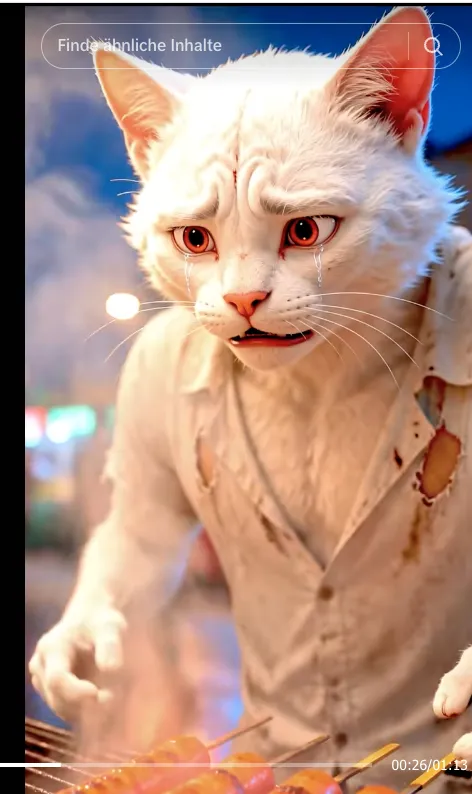
Cat Stories: When Cats Star in Their Own Soap Opera
The internet has always loved cat videos. Then AI came along and threw in marriage troubles, hospital corridors, and slow-motion tears. All stitched into plots that feel like they were dreamed up by a broken vacuum cleaner. It is emotional manipulation as imagined by a processor: all the right buttons, none of the actual feelings. Welcome to the age of Artificial Kitsch.

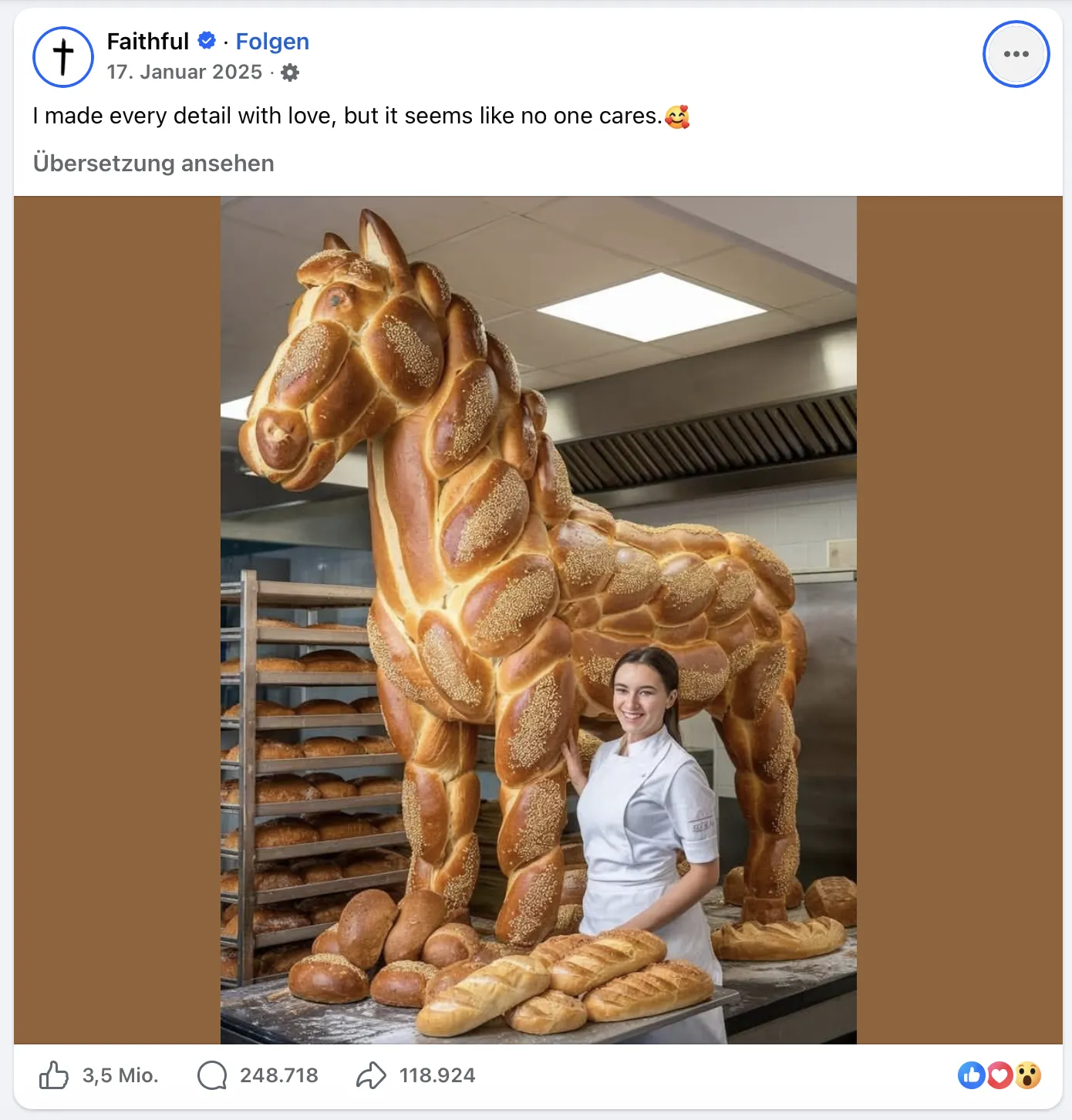
Handmade by No One: Fake Craftsmanship Slop
Then there is the endless gallery of handmade “wonders”: a massive ice sculpture, a crocheted tractor, a church-shaped baby cradle, a nearly life-size horse made of bread, all supposedly crafted with painstaking care, and every single one paired with a syrupy caption along the lines of: “I made every detail with love. It’s nothing special, I just wanted someone to say something nice about it.”
Of course, no human hand ever touched any of it. And yet these interchangeable clickbait posts keep showing up in every imaginable variation, along with plenty of people who take the sympathy bait and reward the slop with thousands of likes and comments. (Media literacy, anyone?)

AI Slop in Marketing: When Brands Fumble
As long as it is just users and bots churning out hundreds of Shrimp Jesus variations and flooding social feeds with trashy cat soap operas, AI Slop can still be dismissed as a bizarre internet sideshow. It gets serious when major brands start producing slop of their own.
Marketing is especially prone to this, because it is always under pressure to produce. More channels, more touchpoints, more variants, more content. At first glance, AI looks like the perfect fix, because it promises more output, faster and at lower cost.
Until you notice that quality often nosedives right along with it. For everyone who thinks mainly in numbers and ROI: the damage to the brand can easily outweigh whatever you saved on production.
Marketing Fail #1: When Coca-Cola’s “Real Magic” Tastes Artificial
In 2024, Coca-Cola gave its iconic Christmas campaign an AI makeover. The results were disastrous. People immediately spotted the visible glitches, like truck wheels spinning the wrong way or faces glowing in unnatural light. Those alone would have been forgivable.
The real problem ran deeper. A brand that had spent decades building an unmistakable holiday feeling out of warmth, nostalgia, and a carefully measured dose of kitsch had just handed that exact feeling over to an algorithm, and it did so under the tagline “Real Magic,” of all things.
What pushed the ad into uncanny-valley territory was not any single glitch. It was the lifelessness underneath it all. It simply did not feel like Coca-Cola anymore. The emotional substance of a brand cannot simply be generated on command. And the audience felt that difference faster than they could put it into words.
Marketing Fail #2: When Luxury Brands Suddenly Look Cheap
In late 2025, Valentino promoted its new DeVain handbag with an AI-generated campaign and faced a backlash of its own. This was not even a case of carelessness: the AI use was openly disclosed, digital artists were involved, and the concept was clearly defined. The campaign positioned itself as a creative experiment, not a shortcut around production.
This time, the problem was not AI use itself. It was the poor fit with the brand. The output simply did not match what Valentino stands for. For a couture house known for its craftsmanship and design precision, surreal bodies and morphing logos did precisely nothing to reinforce the brand. The audience’s verdict was accordingly brutal: cheap and completely off-brand. Ouch!
Of course a fashion house like Valentino can work with AI, no question there. But the campaign shows exactly what happens when AI is used without a genuine feel for the brand. If you are selling premium, you cannot deliver trash.
What Matters Next: Relevance and Real Ideas
Here is where it gets interesting for marketing pros. The answer to the slop tsunami is not more content. It is less content with a much higher bar.
The Critical Currency Is Time
In a world where people are buried in content, the attention economy keeps getting more brutal. The question is not “Will my content get seen?” anymore. It is “Will anyone actually give it time and attention?”
Attention has become the hardest currency of all. Anyone who has scrolled through their LinkedIn feed in the past year knows exactly what I mean.
Why would I spend ten minutes of my life on something the creator did not even spend one minute on?
That line, from a LinkedIn community roundup by snipKI, nails the feeling exactly.
Audience Filters Are Getting Stricter
Only the exceptional, the surprising, or the genuinely relevant still gets past your audience’s mental spam filter these days. Everything else gets ignored, swiped away, and forgotten before it even registers. That has been true for years, and AI has only turned up the volume.
Making Content Worth Anyone’s Time Is Harder Than Ever
Absurdly enough, that is exactly what makes content production tougher than ever. Production is no longer where the difference is made. By now, anyone can produce.
The difference is made in strategy, insight, and the strength of the creative idea. Brands that turn real insight into genuinely great ideas rise above the slop. Everyone else drowns in it.
The real question is: is this idea worth turning into content at all?
Let’s beat that slop!
Great strategy and genuinely original ideas still take real professionals: people with experience, instinct, and judgement. You can hire them. Or take the more efficient route and build their expertise directly into the AI tool you already use.
That is exactly why BBN AI Studio has distilled years of marketing experience into AI skill sets that make output more relevant, smarter, and more useful from the very first draft.
With that in mind, let’s start showing our audiences some respect again: with better insights, smarter strategies, genuinely relevant content, and ideas that actually excite people. Let’s beat that slop!